Growth & Optimization
A/B Testing Basics
Discover how A/B testing helps you make data-driven decisions by comparing different versions of a page, design, or element to see what performs best.
Intermediate
6 min read
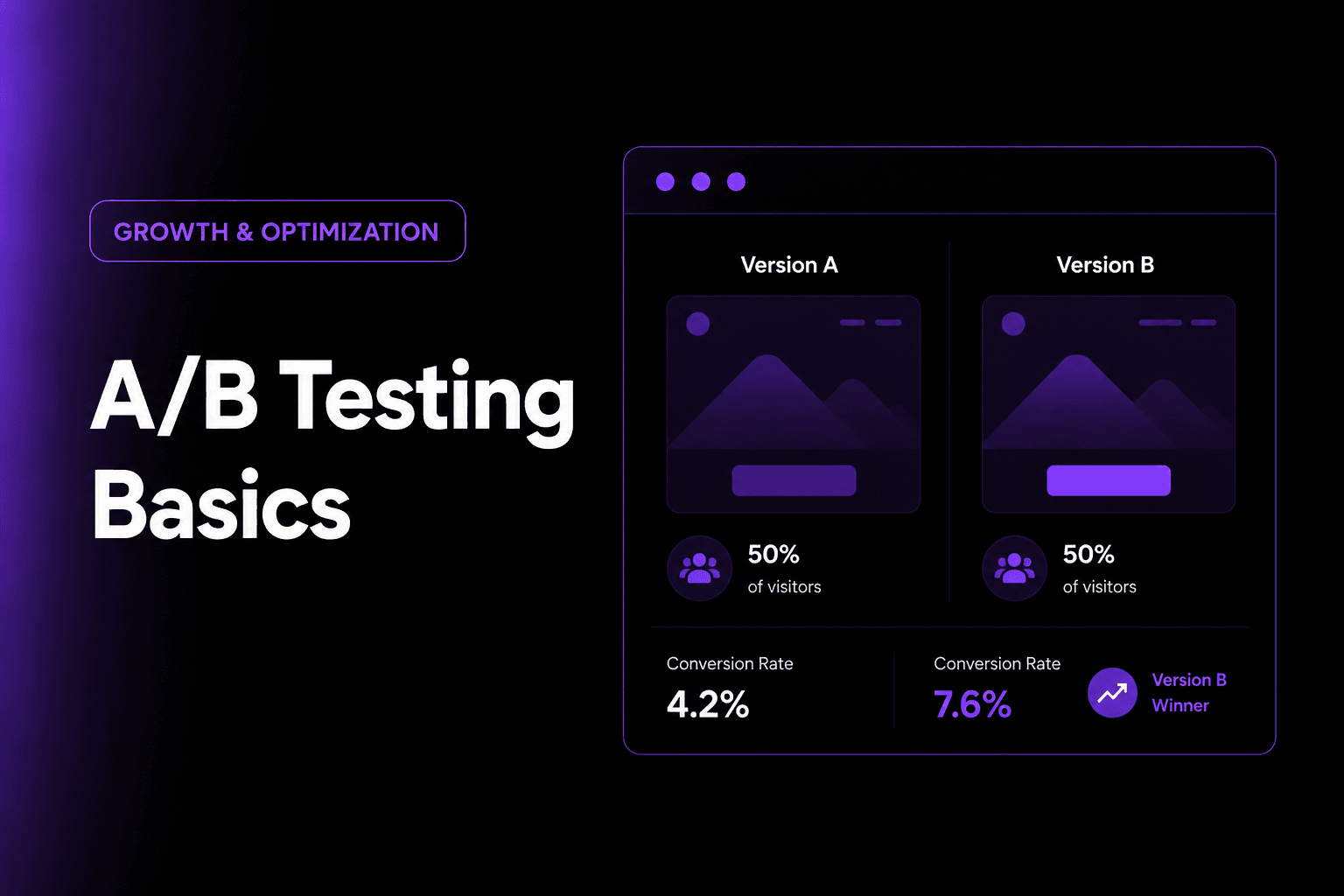
A/B testing is one of the most effective methods for improving website performance. Rather than relying on assumptions or personal preferences, A/B testing allows you to measure how real users respond to different versions of your website.
Whether you're optimizing a landing page, improving conversion rates, or refining user experience, A/B testing helps identify changes that produce measurable results.
This guide explains how A/B testing works, what you should test, and how to use experimentation to improve your website over time.
What Is A/B Testing?
A/B testing is the process of comparing two versions of a webpage or element to determine which performs better.
Typically:
Visitors are split between the two versions, and performance data is collected to identify the winner.
Why A/B Testing Matters
Without testing, website decisions are often based on opinions.
A/B testing helps:
Improve conversion rates
Reduce guesswork
Validate design decisions
Improve user experience
Increase engagement
Optimize marketing performance
Small improvements can have a significant impact over time.
How A/B Testing Works
A typical testing process follows these steps:
This structured approach helps teams make informed decisions.
What Can You Test?
Almost any website element can be tested.
Common examples include:
Headlines
Buttons
Images
Navigation
Forms
Pricing sections
Page layouts
Calls to action
Start with elements that directly influence user behavior.
Testing Headlines
Headlines are often one of the highest-impact elements on a page.
Example:
Version A:
Version B:
A test can reveal which message resonates more strongly with visitors.
Testing Calls to Action
CTA buttons frequently influence conversion rates.
Examples:
Version A:
Version B:
Even small wording changes can affect performance.
Testing Button Design
You can test:
Colors
Size
Placement
Labels
Visual emphasis
The goal is not to find the most attractive button, but the one that helps users take action most effectively.
Testing Layouts
Page structure can influence how visitors consume content.
Examples include:
Different section orders
Alternative hero layouts
Content positioning
CTA placement
Layout tests can uncover opportunities to improve engagement and conversions.
Testing Forms
Forms are common conversion points.
Potential tests include:
Number of fields
Field order
Button text
Layout design
Validation messages
Reducing friction often improves completion rates.
Create a Hypothesis
Every test should begin with a clear hypothesis.
Example:
A hypothesis provides a reason for running the experiment.
Test One Variable at a Time
A common beginner mistake is changing multiple things simultaneously.
Example:
Avoid changing:
Headline
Button
Layout
Images
all within the same test.
Instead, focus on a single variable whenever possible.
This makes results easier to interpret.
Collect Enough Data
Tests should run long enough to gather meaningful results.
Ending tests too early can lead to inaccurate conclusions.
Factors that affect test duration include:
Website traffic
Conversion volume
Test significance
Patience is often required for reliable outcomes.
Focus on Meaningful Metrics
Choose metrics that align with your goals.
Examples include:
Conversion rate
Form submissions
Signups
Purchases
Click-through rates
Avoid focusing on vanity metrics that don't support business objectives.
Common A/B Testing Examples
Popular experiments include:
CTA button text
Hero section messaging
Landing page layouts
Pricing page structure
Form length
Navigation labels
Social proof placement
These areas often provide measurable opportunities for improvement.
A/B Testing and UX
A/B testing is not only about conversions.
It can also help improve:
Navigation clarity
Readability
Content organization
User satisfaction
Better user experiences often lead to better business outcomes.
A/B Testing and SEO
Be careful when testing pages that receive significant organic traffic.
Major content changes may temporarily affect:
Rankings
User behavior
Engagement metrics
Always evaluate tests within the broader context of SEO performance.
Document Your Results
Every test provides valuable information.
Track:
Hypothesis
Variations
Duration
Results
Conclusions
Documentation helps prevent repeating unsuccessful experiments and creates a history of learnings.
Common A/B Testing Mistakes
Testing Too Many Changes
Multiple simultaneous changes make it difficult to identify what caused the results.
Focus on one variable whenever possible.
Ending Tests Too Early
Early results can be misleading.
Allow sufficient time to gather meaningful data.
Testing Without a Goal
Every experiment should have a clearly defined objective.
Without a goal, results become difficult to evaluate.
Ignoring Negative Results
Not every test produces improvements.
Unsuccessful tests still provide valuable insights.
Copying Other Websites
What works for another business may not work for yours.
Use testing to understand your own audience.
Best Practices
Create a clear hypothesis
Test one variable at a time
Focus on meaningful metrics
Collect sufficient data
Document results
Prioritize high-impact pages
Use testing to guide decisions
Review both positive and negative outcomes
Optimize continuously
Focus on user behavior rather than opinions
Final Thoughts
A/B testing is one of the most effective ways to improve websites through evidence rather than assumptions. By systematically testing headlines, layouts, calls to action, and user flows, you can make informed decisions that improve both user experience and business performance.
The most successful websites are rarely built perfectly from the start. Instead, they evolve through continuous experimentation, learning, and optimization.
Frequently Asked Questions
What is A/B testing?
A/B testing compares two versions of a webpage or element to determine which performs better based on real user behavior.
What should I test first?
Start with high-impact elements such as headlines, calls to action, forms, and landing page layouts.
How long should an A/B test run?
The answer depends on traffic volume and conversion activity, but tests should run long enough to gather meaningful data.
Can A/B testing improve conversions?
Yes. A/B testing helps identify changes that encourage more users to complete desired actions.
Should I test multiple changes at once?
Generally no. Testing one variable at a time makes results much easier to understand and apply.
related guides
Frequently Asked Questions
What is A/B Testing Basics?
This article explains the key concepts, best practices, and practical applications related to a/b testing basics.
Why is a/b testing basics important?
Understanding a/b testing basics can help improve implementation, decision-making, and overall results.
What are the main takeaways from a/b testing basics?
The article highlights common best practices, recommendations, and important considerations readers should understand.
framerbaseio